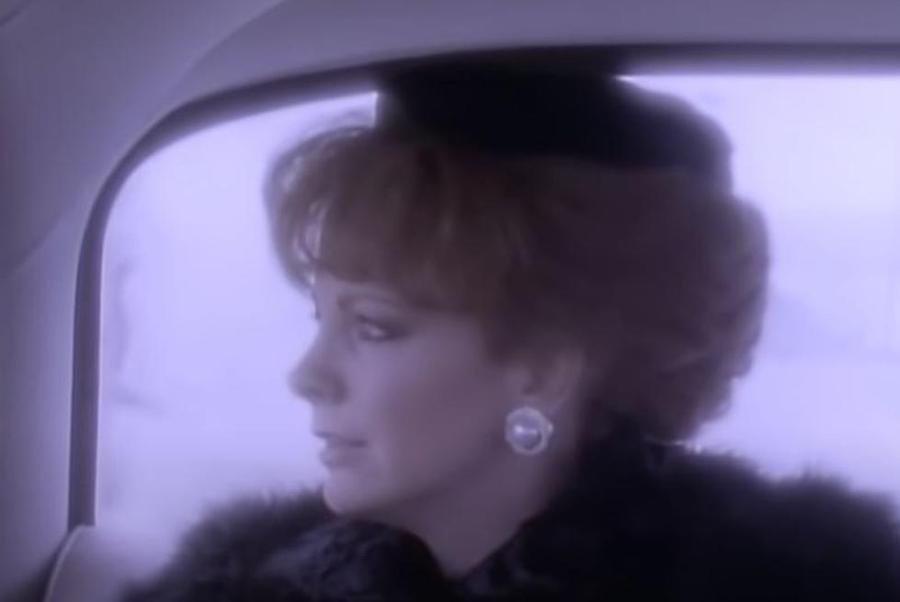
(Image taken from the “Fancy” music video)
Previous: Favorite Hit Country Songs of 1992
Well, this is it: where ‘90s country all started. I don’t necessarily mean that from an artistic standpoint; many beloved acts featured here today were merely furthering established momentum. No, I’m referring to the introduction of SoundScan, which finally gave country music the commercial platform it had always deserved (I’ve also already written about that at considerable length, so if you’re curious to learn more, click here).
And because we’ve examined these years in reverse, we’ve already seen and explored the results to their fullest potential. It’s been a glorious ride, but we’re not quite done just yet, as this year also fosters its share of classics ready to be revisited. I also think it’s a powerful showcase for how big and splashy certain songs could be coming from artists looking to make actual statements, but more on that later.
For now, as a refresher, regardless of whether you are or aren’t new to this feature, this is a series in which we explore the hits of yesteryear – not necessarily the best or most impactful ones (because that’s just a silly exercise anyway), but rather just personal favorites, meaning I invite you to share yours, too. If you’re curious as to what qualifies for this particular list, here’s a handy guide. Let’s get started.
No. 10 – Vern Gosdin, “Is It Raining At Your House” (written by Vern Gosdin, Dean Dillon, and Hank Cochran)
Vern Gosdin’s final top 10 hit, which means for us it’s where we start to explore one of country music’s most underrated talents. Our first selection of his is an interesting case study: a track carried over from his landmark Chiseled in Stone album, which received a second life as a single from being featured on a greatest hits compilation. I’m glad for it, because it fits so comfortably with his best material, and is a good showcase for why he was nicknamed “The Voice.” He’s got the sort of smooth flair and huge range that always draws immediate comparisons to George Jones (and Sammy Kershaw, for a more contemporary example), but there’s also just enough rough, haggard edge to his delivery that makes his heartache-drenched tracks cut deep.
So here, where he has to play the role of someone who wants so desperately to reconnect with an old partner but knows she’s likely moved on, it’s classic country heartache territory that can manage to feel more sympathetic than whiny. Maybe it’s the delicate touches of piano and pedal steel that set a somber atmosphere, or maybe it’s because there’s a hint of self-awareness in Gosdin’s delivery that suggests he knows his plea is for naught, and will have to go on loving her without her. Either way, it’s the sort of tasteful showcase of heartbreak I’ll always love. Brad Paisley’s version of this song introduced me to this song and Gosdin in general, but there’s no beating this take – not in terms of sheer emotional devastation, at least.
No. 9 – Reba McEntire, “For My Broken Heart” (written by Keith Palmer and Liz Hengber)
The one element I noted about Reba McEntire’s records from 1992 was that they were splashy and dramatic, in ways that inspired fantastic storytelling and even big inspirational statements, too. She’s always been in fantastic control of those kinds of moments, but this … well, if those songs showed a fiercer version of McEntire ready to take back control and experience an artistic rejuvenation, this is the moment of needed clarity to get there.
For My Broken Heart was inspired after an airplane crash killed most members of her touring band. I’m not one to believe that suffering is required to craft great art; that can come in a multitude of unexpected ways. But it’s also hard to ignore that context when viewing the title track, which is actually a fairly straightforward breakup song … on paper. It’s McEntire’s interpretation, once again, that sells it, from the frankness that comes with having to say goodbye, regardless of whether or not one is actually ready to do it, to knowing that you have to eventually keep going. In the context of the song, she has to do that for herself, but in greater context, she also has to keep living to honor her band members who would have wanted her to continue. Decades after the fact, I’m glad she found that strength, impossible as it may have been to find at points.
No. 8 – Mary Chapin Carpenter, “You Win Again” (written by Mary Chapin Carpenter)
Man, you just don’t mess with a Mary Chapin Carpenter kiss-off track, especially when it’s a venomous slow-burn like this. It’s my pick for her most underrated single, a spiritual predecessor to “He Thinks He’ll Keep Her” that frames a one-sided relationship mostly defined by gaslighting and a great little electric guitar groove.
If anything, though, it’s equal parts frustration as it is a needed wake-up call to finally settle for more, only heightened by Carpenter’s increased growl that only gains more intensity as the song progresses. Bitter in the best and most heartbreaking way, Carpenter wins again.
No. 7 – Mark Chesnutt, “Brother Jukebox” (written by Paul Craft)
It’s about time I discussed this artist at length for this feature, though it is a bit strange that I’m doing so through an older song covered by acts like the Everly Brothers and Keith Whitley. If anything, however, “Brother Jukebox” is emblematic of why I love Mark Chesnutt’s early work most, because this is played fairly dark and bitter in a way that feels most fitting for it, even for classic country heartache territory.
It’s also a bit cleaner and more robust, coasting off that well-balanced guitar groove and melodic bounce to lend just enough strength to a character who tries to drown his despair with self-deprecating humor. It’s hopeless but not desperate, where our character has decided to just resign himself to his fate of living with father time, sister wine, and other members of the house with a sly wink, bolstered even further by Chesnutt’s even-keeled delivery. Hey, that’s what family is there for, right?
No. 6 – Brooks & Dunn, “Brand New Man” (written by Kix Brooks, Don Cook, and Ronnie Dunn)
This is where it all began for country music’s biggest duo, and really is emblematic, I think, of why ‘90s country resonated so strongly – with established country fans and newcomers alike. Even listening to this today, it’s amazing how fresh this still sounds, and how much of an energetic kick it carries from beginning to end in nearly every category (though especially through that hook).
All the more fitting for a song about becoming a brand new version of yourself – in this case, through newfound love – which even shows enough restraint never to feel hokey or cloying in framing it all as mostly personal salvation. And with Ronnie Dunn’s huge, expressive range to carry that sentiment, it’s definitely as cathartic as intended. A fitting introduction for a song about a reintroduction, and a career high-point for the duo.
No. 5 – Hal Ketchum, “Small Town Saturday Night” (written by Pat Alger and Hank DeVito)
It’s Hal Ketchum’s defining hit, and I can’t argue with that. Though, with a title like that, it’s not a song that would be written or performed as well as this is today. That’s the beauty of this song; it takes a familiar theme in country music and dissects it at its core. It’s not a song about loving one’s hometown enough to stay or hating it enough to leave; it’s both.
And it’s told from the eyes of hungry, wild-eyed teenagers, where the song’s generally strong bounce and rollick anchored by the saloon piano and slight hint of accordion for the hook provide added pluses for this song’s overall youthful energy. It’s a slice of life told as is and nothing more, depicting a small town with actual detail that makes this nameless town and its characters actually feel alive, where some will stay and some will leave, either by choice or because they have no choice. We’ve heard it before and will hear it again, but I’m not sure we’ll ever hear a song that digs at the core as effectively as this again.
No. 4 – Trisha Yearwood, “She’s In Love With the Boy” (written by Jon Ims)
A dynamite start, though it also seems like something of an anomaly for Trisha Yearwood’s discography. It’s a relentlessly upbeat track augmented by a bouncy fiddle line that simple tries to play coy with its dramatic stakes, though every element of what would make Yearwood’s material is excellent is present here: from the measured storytelling, to a performance she’s in full control of, to the full independence granted to the characters sketched here who are unique and in control of their own situations – that final verse is still an all-timer, because you can’t stop love.
If this year beats the others in any department, it’s in the huge, anthemic hooks. Sing along; surely you know how this one goes.
No. 3 – Pirates of the Mississippi, “Feed Jake” (written by Danny Mayo)
I like to think Pirates of the Mississippi as alt-country in spirit, a bit before that term actually came to fruition. I mean, they debuted with a Hank Williams cover, mixed their country with folk and rock, and penned a lot of thoughtful material – some of which has gone criminally overlooked today. It at least was rightfully recognized on one occasion, on a song with enough windswept cracks in the production to suggest our character is older, wiser, and contemplating a lot of things in life.
Indeed, he is, from homelessness, to poverty, to bigotry. And it’s told from the perspective of a traveling musician who’s seen a lot of the world around him, enough to be empathetic toward the plights of the forgotten. And while it’s implied he fits somewhere within that group, it’s surprisingly outward-looking and forward-thinking, especially for a song from over 30 years ago. And yet, it’s a simple chorus, centered around his titular dog that’s meant to imply a sense of camaraderie in a creature that can’t really hate; only love. It’s ironic and sad that as we witness more evils of the world, we turn further inward, jaded by people as we turn to pets or whatever else for solace. It says it best: “What we are and what we ain’t / What we can and what we can’t / Does it really matter?”
It doesn’t, and it’s also why I think there’s a solemn thankfulness that adds an appreciated levity and perspective here for still pushing through an unforgiving world. Most people are inherently good, and we should cherish each other. It’s a slightly forgotten gem from this era, but as far as country songs that capture the human experience and, you know, real life go, there’s few better.
In your face again, Garth!
No. 2 – Garth Brooks, “The Thunder Rolls” (written by Pat Alger and Garth Brooks)
The top two songs on this list are both dark, heavy, and absolutely blaze through their stories via performers known for their strong theatrical bents. And they do so in ways that symbolize the power of both country music storytelling and how much a powerful performance can actually bring those stories to life.
A roundabout way of saying … man, this song. The ironic part is that this murder ballad, originally intended for Tanya Tucker to release as a single, is one Brooks actually mostly effectively underplays, letting the straightlaced tension of his delivery add a solemn frankness to a song that punctuates its atmospheres with sharp stabs of electric axes to mimic that thunder rolling in (along with, you know, actual thunderous sound effects). It’s a different test of his charisma, but it’s no less gripping.
The song also walks a careful balance, letting its recurring, slow-picked acoustics establish the tension before eventually erupting when proof of a husband’s infidelity comes to light.
Truthfully, I’m a bit torn on whether or not I prefer the single version or the live version, the former of which cuts a verse that’s only famously added back in at Brooks’ live shows and shows the actual act of revenge murder committed. Sure, it leaves out arguably the most crucial part of the story, but it’s not like one can’t piece the details together anyway; it’s all about establishing that tension anyway, not initiating the actual lightning strike (even if that does happen). Either way, no one is weathering this storm and walking away the same person as before. It’s chilling, it’s epic, and it’s a blaze of glory that carries all the intensity it needs to still hold up today. “Friends in Low Places” and “The Dance” are likely more iconic, but this will always be my favorite of his.
As always, before unveiling my No. 1 pick, here are a few honorable mentions that just barely missed the cut for this list, presented in no particular order:
George Strait, “The Chill of an Early Fall” (written by Green Daniel and Gretchen Peters)
A Gretchen Peters lyric combined with a tender George Strait performance? I’m sold, even if I somehow always sing this to the melody of “Green, Green Grass of Home” for some reason.
Mary Chapin Carpenter, “Down At the Twist and Shout” (written by Mary Chapin Carpenter)
I guess I prefer dark Carpenter to the fun version of her. Love that accordion, though.
Don Williams, “Lord Have Mercy On a Country Boy” (written by Bob McDill)
Like with “Small Town Saturday Night” before it, only during this era could you have a song with a title like that and actually have it be great and thoughtful.
Diamond Rio, “Meet in the Middle” (written by Chapin Hartford, Jim Foster, and Don Pfrimmer)
Again, 1991 featured some monster hooks.
Reba McEntire, “Rumor Has It” (written by Bruce Burch, Vern Dant, and Larry Shell)
Another fantastic, devastating song in a year full of ‘em.
Suzy Bogguss, “Someday Soon” (written by Ian Tyson)
I’m a sucker for a good old-time folk flair in my story song.
Marty Stuart, “Tempted” (written by Marty Stuart and Paul Kennerley)
I admittedly prefer Marty Stuart’s more eclectic, album-focused phase of his career, but when he hit with his singles, he hit.
Kathy Mattea, “Whole Lotta Holes” (written by Jon Vezner and Don Henry)
Kathy Mattea’s singles from this year had an old folk-like charm and rollick to them, enough to where they even feel like unearthed traditional gems. This is a simple but effective example.
And lastly, while I normally only consider top 20 hits when compiling these lists, I’d be remiss not to mention two great songs about eagles, from Dolly Parton, with “Eagle When She Flies,” and Waylon Jennings, with “The Eagle” (the former written by Dolly Parton / the latter written by Mack Vickery, Hank Cochran, and Red Lane).
And now, my No. 1 pick:
No. 1 – Reba McEntire, “Fancy” (written by Bobbie Gentry)
The weird thing about this year is there are actually a couple of covers here, some of which are well-known and some of which aren’t. But all, to me, improve and refine the spirits of the originals. And that’s a heavy statement for “Fancy,” originally written and recorded by Bobbie Gentry, known most for “Ode to Billie Joe.” But with that context, there’s also a difference in artistic interpretation that will or won’t connect with listeners depending on what one best thinks suits the mood.
So with the original “Fancy,” there’s a tinge of sadness and regret to this tale – the story of a young woman thrust into prostitution by her own mother to save her from a lifetime of desperation and despair. With McEntire and her knack for nailing broader theatricality, she turns it into a propulsive empowerment anthem, knowing that she had to resort to what she had to do to save herself and her family, and that it’s not exactly as seedy as what other characters have resorted to for survival – especially in country music.
So all of that righteous fury pointed toward critics and hypocrites is part of why that chorus is a nasty little ball of energy in the best possible way, especially as our titular character actually does watch her family lose everything and never gets to provide for them as intended. But regardless, she stays true to herself and climbs her way out on her terms. And given this song’s depressing, hardscrabble detail, there’s not much anyone wouldn’t do to escape that hell, I don’t think. It’s as ambitious on paper as it is in execution through McEntire’s take, and without question it’s the star that burned brightest from this year; Fancy didn’t let anyone down.


 The Musical Divide