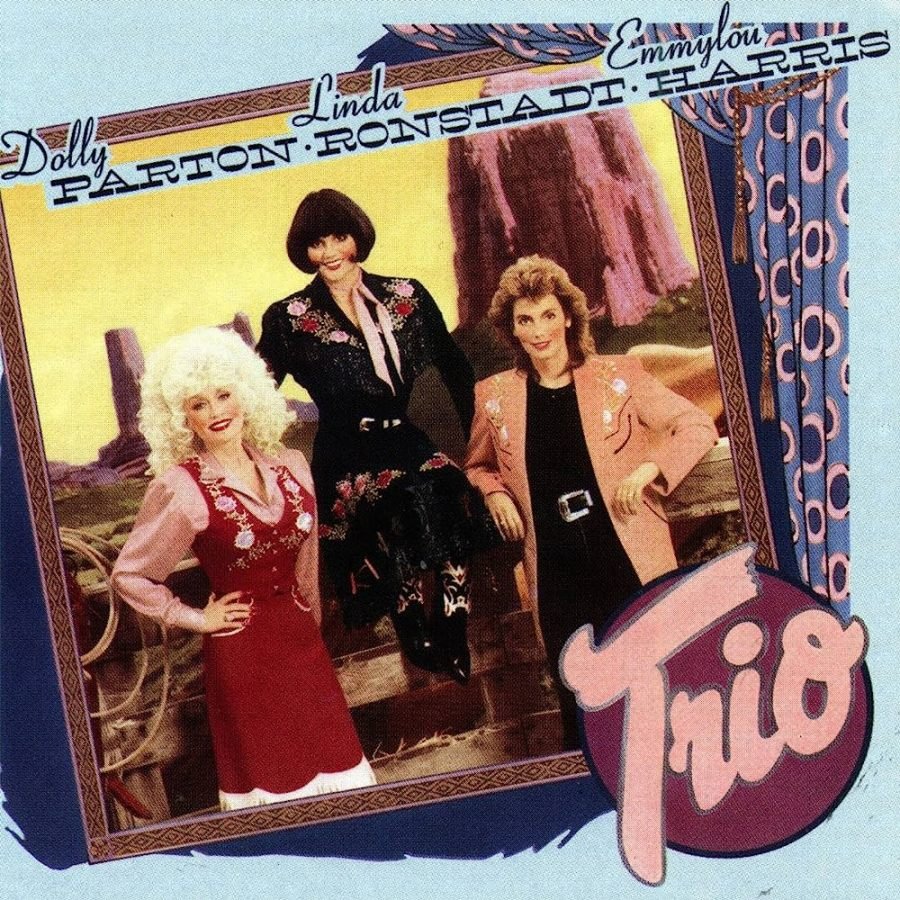
If I’ve (hopefully) made my case for anything through these last few editions of this series, it’s that the late ‘80s provided a gateway to some of country music’s most creatively diverse talents ever. Of course, we’ve mostly looked at this renaissance period through albums from newcomers. And while we did examine albums from much earlier in the decade from established veteran acts before, by this point it was clear that country music was shifting gears in a big way. So, what did some of these established veterans do?
Well, in at least one certain case, three of them decided to join in on the fun and craft their own long overdue passion project together. This will likely be the trickiest edition of this series to properly examine and dissect – if just from my end – given that I’m weaving together three narratives instead of just the usual one. Even still, when the music is this good, I always welcome a challenge. Onward!
The key focus for the last few editions of this series has been one of change. In a way, I’ve set up something of a divide in the framing of those conversations. New artists flourished while older artists struggled, but in truth, it’s not as clear-cut or simple as that. For certain older artists who struggled to maintain the same sense of chart consistency as before during this time period, there was actually good to be found in releasing themselves from label or commercial pressures.
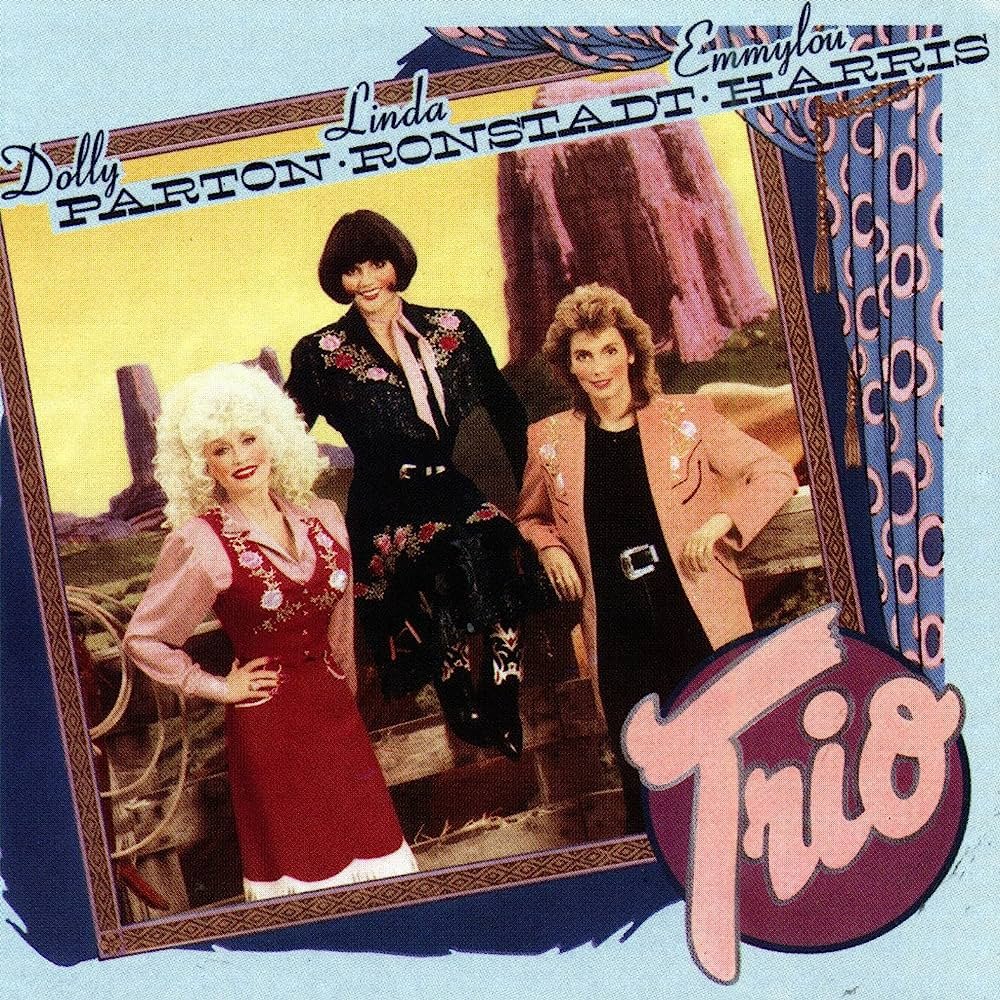
As such, it’s hard to find the exact right way to frame the opening to how Trio came to be. Dolly Parton, Linda Ronstadt, and Emmylou Harris began to record together in the late 1970s, and given their own artistic tendencies and ear for stellar material, it’s a collaboration that almost made too much sense. But, due to record company procedures and politics, they were never allowed to explore those collaborations to their fullest potential. Instead, some of those loose recordings made their way onto their own solo albums over the years.
By the mid-’80s, though, all three artists seemed to be at a crossroads with their own individual careers. I’m careful not to call it a down period for any of them – just a weirdly inconsistent one where change was imminent, and in more ways than one. I suppose it could apply to Harris, given the poorly received White Shoes album, but she bounced back with some of her most creatively ambitious material to date not long afterward, through both the semi-autobiographical The Ballad of Sally Rose concept album and the underrated Thirteen. They just, sadly, weren’t commercial success stories.
Parton, on the other hand, was a country-pop crossover success and cultural icon by this point, no doubt at her commercial peak … albeit with some poorly received singles and albums during this time period that also alienated her core country audience somewhat. And then there’s Ronstadt, who at a glance may seem like the odd one out of this trio. But those familiar with their history know her as one of the pioneer acts of the West Coast country-rock sound of the ‘70s, and one whose talent could help her slide naturally into a diverse selection of genre choices, from pop, to folk, to rock, and country.
Again, that’s why I frame it as a turning point, above all else. One where despite the different paths all had embarked on artistically, the timing was right for them to come together and pool their talents together. The key that actually made it happen came when Parton was released from her contract with RCA in 1986, which finally freed her to record with her friends. And, as it turned out, what started as a long overdue labor of love revitalized every artist involved in nearly every way.
It’s also a fitting album to discuss for its time period, a back-to-basics project that feels like it takes the core strength of every artist involved and amplifies those strengths to work in tandem with one another. There’s a lovely, refreshing crispness to the production reminiscent of Harris’ best work, and there’s an emotional devastation evident in the material itself that requires a careful hand to guide it, which is where Ronstadt’s natural gift for interpretation comes into play. And alongside two performers known for carrying on the legacy of great material, we have Parton’s natural gift for songwriting to add unique perspective, at least in some instances.
But throw it all together, and what keeps Trio so continuously inviting even now are those harmonies. Paradoxically angelic and devastating, almost like a siren song for an album that’s more downbeat on paper than how it may appear at first glance. Heck, without reading the writing credits or knowing where certain songs here originally stem from, you’d think some of these songs were old revived folk ballads, given their haunting and crisp melodies. Indeed, this is an album that does look to the past quite often, another trademark of all involved that nevertheless seeks to add to new life to it for the modern age.
And I think it’s most noticeable in sound and overall production, an album that sounds influenced by Appalachian roots, given the copious amounts of chipper, roiling mandolin, old-time fiddle, and plucky acoustics incorporated into the mix. Strikingly out of place for the country music landscape – even during this time – but in a way that sounds like a refreshing return to roots, and one that all three involved could effectively handle.
There are a few exceptions, like the big hit single via the Phil Spector cover of “To Know Him is to Love Him,” what with its sleepy AC touches and quaint bass groove that, I admit, never quite grabbed me. But on a better note, the touches of reverb added to “Telling Me Lies” only heighten the emotional dynamics overall – especially on that hook - to create a power ballad with just the right amount of restraint. And leaving “I’ve Had Enough” as just a spare piano ballad that Ronstadt handles is guaranteed to wreck one emotionally. I also like the touches of gospel added to the closer, “Farther Along,” which is already set up to be a positive song of affirmation anyway and adds an appreciated gentler touch to this album.
Of course, when I say that, I refer to the lyrics and themes, because despite being a project strung together from older covers and lesser-known cuts from deserving songwriters, there is a thematic core to this album that keeps it consistent and sharp. I’d call it an album drenched in heartache, but it goes further than that – an album informed by loneliness and inadequacy, of unrequited love and a lack of acceptance that feels personal and raw in its self-examinations and reflections. And what’s most painful are the moments where everything isn’t yet lost but is the right on cusp of being so, like the realization that a partner is ready to pack up and leave on “Making Plans,” or an equally sad realization that they just don’t love you any longer the same you do them, on “The Pain of Loving You,” a great older duet by Parton and Porter Wagoner.
If I wanted to read deeper into it, I could also call it a note on every artist’s relationship with the music industry by this point in time. It’s somewhat fitting that Ronstadt covers an old Jimmie Rodgers tune in “Hobo’s Meditation,” an outsider’s lament where the character knows they won’t find peace or acceptance from others on Earth, but hopes there’s a place for that someday. But really, it just happens to be an impeccable set of songs weaved together to form a cohesively devastating narrative. One where, again, too, any individual artist could easily wreck a listener with their interpretation, but will mostly certainly do whenever those stellar harmonies kick into gear.
It’s also an album about finding strength in spite of that adversity, where despite the focus on camaraderie outside of that context, it’s a very lonely journey from one song to the next. The lone original here is Parton’s “Wildflowers,” which I liken as not only a return to form artistically, but also as a spiritual successor to “Coat of Many Colors” - a comparison I don’t make lightly – in how it’s a character test of strength and individuality. Again, too, ending it with the cathartic, chipper “Farther Along” does add at least some measure of peace to the proceedings. Maybe not outright closure, but an optimistic outlook that will fuel the fight nevertheless.
Of course, before that there’s also the “Rosewood Casket” cover, a song about fond remembrances of a person after death. And when this album wants to wreck you, it absolutely will. My personal favorite is probably “Telling Me Lies” for how much it swings for the fences on a dynamic level even in spite of this project’s key focus on restraint. And to be fair, that’s what aids a track like “My Dear Companion,” where despite our character’s best efforts, they know they’ll never measure up to the person they love most, just like with “The Pain of Loving You.”
It’s what helps this album eschew a common critique that it’s just a collection of songs rather than its own cohesive statement, because there is a consistency here that combines every artist’s individual strength and amplifies those strengths to their fullest potential. And really, outside of my personal nitpicks with “To Know Him is to Love Him” as well as “Those Memories of You” just lacking the same dramatic impact as other cuts in this vein for also feeling a bit too quaint, it’s very hard to find any outright flaws with this album. It is, again, a labor of love that came around at the perfect moment, and when you have three exceptional talents who all operated at arguably their best here, it’s easy to hear the magic on display.
Join me next time, where we’ll discuss our final ‘80s album by setting things up for the next decade, and talking about the biggest member of the coveted class of ‘89 out of the gate. No, it’s not Garth Brooks; we’ll talk about him later. I’m referring to Clint Black and Killin’ Time.


 The Musical Divide