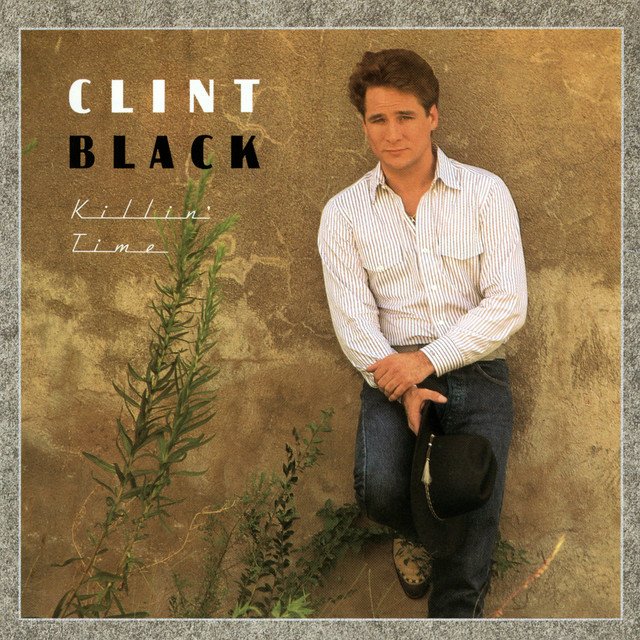
As you might expect, our final discussion through this series for country albums released in the ‘80s is meant to establish momentum for our eventual discussion of the next decade. Our most recent discussions have focused on fresh faces that brought new ideas and sounds into the country format (or revived old ones … or did both), so it’s fitting that today’s discussion ropes in a new class altogether that would reshape the format, all in their own unique ways. You’ve likely already got an idea in mind of just who we’ll talk about soon enough, but as for the biggest new act to roar into the new decade … well, you may be surprised.

We’ve talked a lot about change over the course of our last few discussions through this series, most notably via the rise of several newcomers to the country music scene: from the class of ‘86 (the Texas version and the more general one), to really just the melting pot of sounds and influences in general. As I’ve said several times by now, there was truly something for every country music fan during this rebirth period for the format.
The thing is, it was a movement to reshape the format from within, and for as much as I do love the artists we’ve discussed thus far, it’s hard to say the format had a true leader or superstar during this point. Granted, the pure variety really was part of the unique appeal of the time, but country music had to sort itself out before it was ready to show the world the fruits of its labor.
Basically, because of these new acts, country music ended the 1980s poised for a boom period. Renegade songwriters and iconoclastic talents dominated the record-label rosters and made inroads at country radio. It struck a balance that would set the stage for country music’s next 30 years, even if the mediums of representation would change with the times. And in 1989, four new names emerged that would set that course on its way out of the ‘80s and into the new decade.
Granted, I say that mostly to denote how each act released their major label debut album that year, because in terms of a true leader of the pack, there was no contest. Travis Tritt’s blend of ‘70s-inspired country with southern-rock stood out for its rugged demeanor and swagger, especially in combination with his equally soulful delivery (one of his cuts was literally called “Put Some Drive In Your Country”). But the lack of flash or polish never quite set him up for superstardom, which was likely just fine for him anyway. Alan Jackson’s warm, charismatic charm suited him well for the ongoing neotraditional movement, and he remained the most consistent presence in the format as time moved forward, but his start was a tad slower than that of his contemporaries.
Really, in terms of commercial prowess, it was a battle between Clint Black and Garth Brooks. We’ll discuss the latter artist in due time, but even establishing that rivalry at all feels wrong in some respects. Right out of the gate, Black was the clear leader of the pack, a Houston native who possessed movie-star looks and a physical advantage that would serve him well in the upcoming music video age. He built his following playing clubs on the Houston-Galveston circuit, often with his songwriting partner Hayden Nicholas. He would not receive greater visibility until Bill Ham, the former manager of rock group ZZ Top, became his manager.
After Black signed to MCA Records in 1988, he ushered in a start like no other, with a debut album that remains impressive as both a work of art and for its actual commercial accomplishments to this very day. I haven’t dabbled much in conversations of raw sales or statistics with these reviews – in part because that really isn’t the point of this feature, and because it hasn’t really been a strong conversational point anyway thus far – but it’s hard not to admire Killin’ Time for what it did for the format. It topped the country charts for 28 weeks, spawned four No. 1 singles, and went on to sell over three million copies. Brooks may have eventually outshone Black in that regard, but I think the legacy of what this album did for the format has been largely (and unfortunately) overshadowed and underappreciated.
In a way, though, I somewhat understand it. The thing about Killin’ Time is that it’s a very low-key, unassuming album, where its strengths ironically come through a sense of restraint and maturity that translates exceptionally well through Black himself as a performer. The Merle Haggard comparisons from a vocal standpoint are damn-near inescapable, and as time went on, Black’s own sound would somewhat drift away from the crisp neotraditionalism of this collection. But going back through it reminded me not only how excellent it still is regardless, but also how wonderfully varied and textured it was for its time and still today. In a way, it reminds me most of Randy Travis’ own landmark debut, Storms of Life: another relaxed country album that’s simply easy to put on and listen through and coasts on pure charm and magnetism.
The thing is, it’s also a strange album to talk about as just that: an album. Iconic singles from this album like the title track and “A Better Man” really are utterly fantastic songs in their own regard, but they also showcase the strange duality of this album as a whole. The latter is a fairly chipper song that coasts on a delicate midtempo groove and melodic flow to celebrate heartache as a learning opportunity; one where, as he says, he can walk away from the experience and see the time spent together as valuable, even if it had to end. The former track, meanwhile, is a sharper, seedier song made for the honky-tonks, sung with a haggard demeanor (pun intended, I guess) as he stews in his misery in glorious fashion.
It’s also kind of humorous and ironic that it begins with “Straight From the Factory,” a western-swing love song that, I admit, is a bit too cutesy for my liking and is the only track here I don’t love, before entering in “A Better Man,” because it’s mostly downhill from there. Not in terms of quality, mind you: I’m referring to our hapless character’s demeanor, from the mindless day-to-day malaise that characterizes “Nobody’s Home” post-breakup, to the equally great slow-burn in “You’re Gonna Leave Me Again,” to some great barroom-inspired observations of life and fellow run-down characters in “Nothing’s News,” “Winding Down,” and, again, the title track. In the context of just the standalone single in “A Better Man,” it’s easy to believe he’s doing as he says in walking away a winner. But if we examine this album as a continuous journey, he really becomes the strung-out, observational poet ready to offer life advice informed by personal mistakes and regrets.
In a way, then, I guess one could argue there’s still something to be gained from that. And regardless of their standings as individual songs or parts of the larger whole, they’re all excellently written, self-contained journeys that fit the general country music spirit. Of course, in saying that, I’m also referring to the general sound and mood, which fits a general honky-tonk atmosphere but features a lot of subtle touches that enhance the experience to make it feel more fully formed and unique: from the slight twinkling texture of “Nobody’s Home” that sets up the appropriate slow-burn but also allows enough space for a strong chorus (perhaps a last cry of defeat from a stale life); the Celtic flair of “Walkin’ Away” that also allows room for its misery to roar; the Spanish-flavored acoustics that have the opposite effect on “You’re Gonna Leave Me Again” in letting the hurt linger; the dobro that adds a nice laidback appeal to the late-night observations of “Winding Down”; the dark, plucky acoustics that drive “Live and Learn” and give way to some dusty harmonica, a song about life lessons offered from a tired shell of a man who doesn’t want other unfortunate souls repeating his mistakes; and, of course, the run of crisp fiddle across this album that’s always welcome.
And while it’s hard to argue against “A Better Man” or the title track as two of the best tracks here and two of the finest country songs of the decade, I think my personal favorite just may be “Nothing’s News.” It’s got a lounge vibe accented by those beautifully creamy layers of pedal steel, and it’s another song about the night life, where our character settles into a new normal of watching the familiar returning patrons around him living their day-to-day lives. It’s a reflective and melancholic to what was and what isn’t coming back around again, empty in spirit, even if there’s still a shred of something there in still caring for the world and people around you. It may not be as immediate as those iconic hits, I admit, but I always love tracks like these that take a moment to stop and reflect on the journey thus far.
I think it’s also indicative, again, of what I love about the album at large. It’s a great nighttime listen that’s still fresh and varied enough in sound and style to appeal to anyone. And while it is the album that would define Black’s legacy almost for the worse over time as he struggled to recapture that magic, very few artists get it this right even with time and experience, let alone from the very start. I can see why it was the standout of its class.
Join me next time, where we’ll roar into the ‘90s, with Garth Brooks and No Fences.


 The Musical Divide