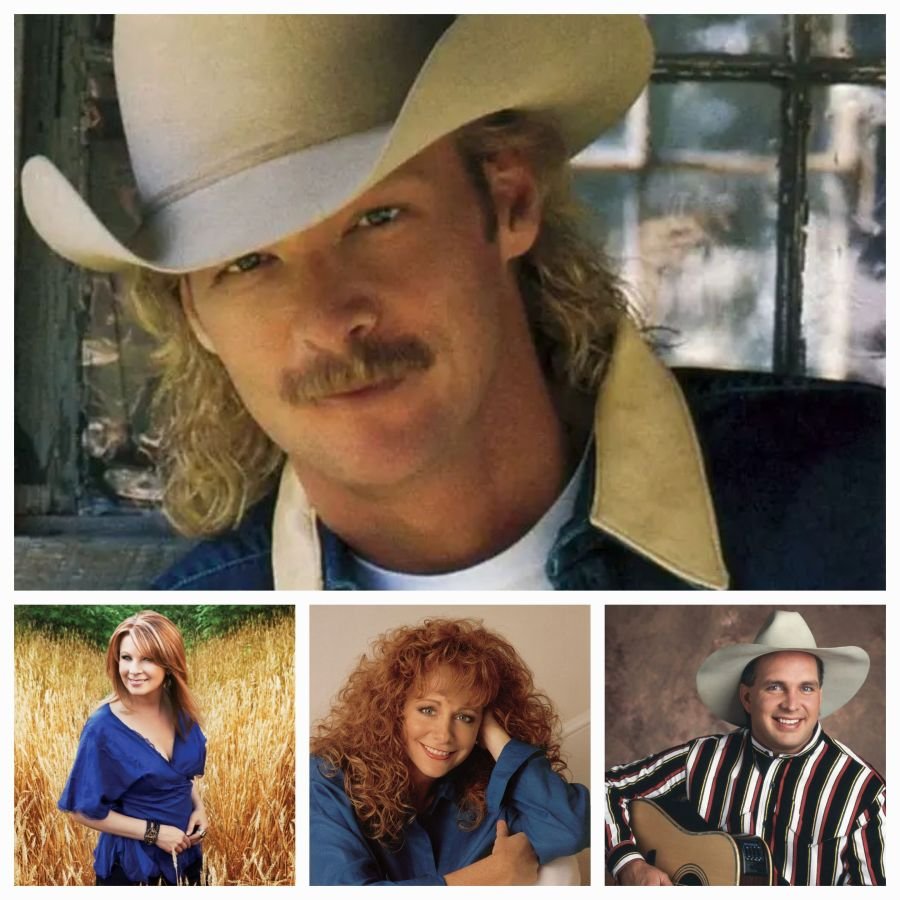
Well, this is it: the big ‘90s country retrospective that will likely mark the biggest milestone of this feature entirely. The 2000s retrospective was basically a childhood love letter for me, but with this, I feel like I’ve taken on greater responsibility to get this “right,” whatever that really means. If anything, the pressure is most certainly on, especially with only 50 slots to talk about my favorite music from this decade.
Of course, that’s the natural caveat with this list: I can’t promise to say that every prominent name or classic song will be featured here, or that it will please you, dear reader. I’m also not calling this a “best of” list for the decade that encapsulates every layer. I can, however, promise you that this is an honest examination of what connected with me most this decade. Besides, it’s hard to come up with an outright bad list for this decade, right?
Well, I certainly hope so. This was actually a weirder decade to explore in hindsight, as certain years just felt lopsided compared to others stacked to the brim with classic hits. And I do, unfortunately, feel like that caused me to default to comfortable, predictable favorites a bit too often at points, a mistake I hope to rectify as we explore the next decade.
Anyway, before we begin, a few ground rules:
- If you’re new to this series, this particular post is meant to act as a roundup for other years we’ve explored. If you’re curious as to what my favorite hits were for a specific year for this decade, you can find an organized list here.
- Feeding off of point No. 1, however, don’t expect this list to just be a simple copy and paste of the previous ones. Thinking about what I actually wanted spotlighted in the top 50 caused me to reconsider certain placements and even some omissions in general, so there may be a few surprises.
- With that said, because I’ve already written about every song here at length – especially the No. 1 contenders for every year – most blurbs will, admittedly, mostly remain the same, with some extra writing at the beginning of every selection to offer any further or needed context.
- Again, this is just my list of personal favorites and personal bias is to be expected, so I’ve limited slots to up to three entries per artist (and trust me, this all came in handy much more than you’d think).
And lastly, like with last time, though it’s only officially a top 50 list, I had to include some honorable mentions, presented only in order of the year they peaked, starting with:
Mark Chesnutt, “Too Cold At Home” (1990)
Brooks & Dunn, “Brand New Man” (1991)
Mary Chapin Carpenter, “Passionate Kisses” (1993)
Vince Gill, “Whenever You Come Around” (1994)
Alison Krauss & Union Station, “When You Say Nothing At All” (1995)
John Michael Montgomery, “Sold (The Grundy County Auction Incident)” (1995)
Jo Dee Messina, “Heads Carolina, Tails California” (1996)
Diamond Rio, “It’s All In Your Head” (1996)
Alan Jackson, “I’ll Go On Loving You” (1998)
And finally, Lee Ann Womack, “A Little Past Little Rock” (1998)
On with the list, starting with …
No. 50 – Randy Travis, “Out Of My Bones” (1998)
This is one of those songs I heard merely in passing a few times before checking it out for this series, and it’s a case of something that just stuck with me afterward. That’s part of its charm, really. It’s low-key while still carrying a lot of expressive kick in its production – particularly that fiddle lick after the hook – Randy Travis’ character is down but far from out, and it’s paradoxically sure and unsure of itself. Basically, it’s not trying to make a grandiose statement; its only goal is to find enough strength to take things one day at a time and always keep a best foot forward, even if it’s easier said than done. At least for me, this is a great first step on that path. It hasn’t left my bones yet, and that’s just fine with me.
No. 49 – Toby Keith, “Should’ve Been a Cowboy” (1993)
You know, it’s amazing how many classics are recognized even just solely for their iconic riffs and hooks. This song’s introduction may not outright scream “spaghetti western,” but it is a slick opening that paves the way for the best kind of fantasy. That’s the whole appeal of it and what makes it so fun to revisit time and time again. For as much as Keith would lean on bravado and swagger in a clumsier manner over the next decade, this is a similar power fantasy that nonetheless feels goofy and sincere in a relatable way.
And for anyone else out there who may have grown up with shows like Gunsmoke or Bonanza, there is something to be said for how lighthearted and chipper this feels in wanting to live out the fantasy of the romanticized Hollywood cowboy over the actual reality of what that once entailed. Heck, even outside of that specific context, it’s simply about wanting to be the star of our own show and having our glory moments, which, regardless of whether that does or doesn’t happen at some point in life, is always fun to revel in, especially through someone as charismatic as Keith is here. Hey, one can always dream, right? I’ll saddle up with it anytime.
No. 48 – Reba McEntire, “The Fear of Being Alone” (1996)
It’s been said before by smarter writers than I, but one thing that truly stood out about this decade and got properly recognized was the song selection for female artists. Often smarter, more biting, and even more challenging than what male counterparts offered, it’s singles releases like this that make it hard to argue with the statement. And this is just the first example of many we’ll explore today. We’ll surely see Reba McEntire’s name again later on this list, but it’s always worth highlighting an impressively mature and direct statement on the nature of love itself.
Granted, she’s actually got several great songs in that vein, but I’d say this is one of her best, a crisply produced song brimming with a huge, urgent hook and fantastic melodic flow that feeds well into its blunt conceit – that on a cusp of a rebound, McEntire isn’t going to play along any more than it’s worth. It could lead to something more eventually, but for now, she’s mature enough to see that she and her current partner are just two lonely souls not quite ready to move on just yet from past pain. In a shorter statement, “take it slow, stupid,” which is even something McEntire’s character has to remind herself of but stays in control of regardless. Better to be alone but happy than trapped but miserable, after all.
No. 47 – George Strait, “Meanwhile” (1999)
This is another case, like with “Out Of My Bones,” of a song that never hit me with much immediate impact before but has stayed with me long afterward regardless. And I guess I can now see why, given that it plays to a lot of traits I like about George Strait singles. It’s sweeping in a lot of hugely gorgeous textures off the fiddle and strings in playing to that huge hook, right down to a key change that I swear is what truly makes this song. And better yet, there’s the framing, which at first depicts a lucky character who’s found love … only for it to unfold as mere wishful thinking on the part of a hapless lover in denial over a wonderful past that doesn’t reflect a current reality; he’s free to replay past memories of a relationship now dead as many times as he pleases, but that will have to hold him over for good. Even then, sometimes confronting the bittersweet memories helps one find temporary levity, and at least here, that’s enough. Meanwhile, continuing onward …
No. 46 – Terri Clark, “Everytime I Cry” (1999)
Exploring this decade made me more appreciative of Terri Clark’s work as a whole, particularly for how sharp it could stand in contrast to some of its more polished competition – especially in the latter half of the decade. There’s a direct edge in the sound and writing I didn’t give enough love to overall, so I’m going to make up for that by highlighting what may be my favorite song of hers.
It’s a great little slow-burn on paper, what with the burnished warmth and potency shining through in a lot of the neotraditional tones that always provided the backbone for her work. But this also doesn’t feel so much like a burn as it does an exercise of frustration pouring out in glorious fashion, hence why I think the real star of the show is Clark herself, whose character is caught in a never-ending cycle of a toxic on-again, off-again relationship that’s very one-sided in terms of who’s benefiting from it. And yet, she returns time and time again, hoping for something different from someone bound to never change. But by the end, she also finally sees this user for what he is, so it ends on a bright note, and a predictably kickass one, at that. Tears of joy sounds more like it.
No. 45 – John Anderson, “Straight Tequila Night” (1992)
John Anderson is probably the one artist featured here who no one likely expected to be a ‘90s hit-maker, especially after a shaky stall in the mid-to-late ‘80s. But he roared back this decade, and he roared back hard.
And given this particular song’s humongous hook and perfect fiddle melody, I can see why this reignited Anderson’s career, because it sounds like a rejuvenation in nearly every form. Granted, that feels like an odd way to frame the actual content: a song where Anderson looks on at a dejected barroom patron. In a way, despite acting as an outside perspective here, I’ve always liked to imagine his role as a little more involved here, as if he’s so innately familiar with what cuts to the bone of this woman chasing old ghosts because he’s the one who hurt her in the first place, or because he’s been where she is and knows what she’s going through. Either way, it’s an excellently sketched story song, if only because there’s empathy present for a woman pursued who’d rather be left alone. Even still, when it’s this infectious, I can’t help but draw out that pain a little longer, because it’s never sounded so good.
No. 44 – Hal Ketchum, “Small Town Saturday Night” (1991)
Given that Hal Ketchum feels like one of those always underappreciated names in discussions like these of the decade’s greats, it’s almost a bit irksome that his defining hit is simply called “Small Town Saturday Night.” But therein also lies the beauty of this song; it takes a familiar theme in country music and dissects it at its core. It’s not a song about loving one’s hometown enough to stay or hating it enough to leave; it’s both.
And it’s told from the eyes of hungry, wild-eyed teenagers, where the song’s generally strong bounce and rollick anchored by the saloon piano and slight hint of accordion for the hook provide added pluses for this song’s overall youthful energy. It’s a slice of life told as is and nothing more, depicting a small town with actual detail that makes this nameless town and its characters actually feel alive, where some will stay and some will leave, either by choice or because they have no choice. We’ve heard it before and will hear it again, but I’m not sure we’ll ever hear a song that digs at the core as effectively as this again.
No. 43 – Trisha Yearwood, “She’s In Love With the Boy” (1991)
A dynamite start, though it also seems like something of an anomaly for Trisha Yearwood’s discography. It’s a relentlessly upbeat track augmented by a bouncy fiddle line that simply tries to play coy with its dramatic stakes, which Yearwood leans into effectively. Even then, every element of what makes her material excellent is present here: from the measured storytelling, to a performance she’s in full control of, to the full independence granted to the characters sketched here, all of whom are unique and in control of their own situations – that final verse is still an all-timer. It’s a heartwarming tale where love prevails, and while she’d later be known for more harrowing, serious ballads – spoiler alert: there’s one to come later – this is still a rush to behold, huge hook and anthemic viewpoint in all.
No. 42 – Travis Tritt, “I’m Gonna Be Somebody” (1990)
This is one of many, many cases where I feel like I’m representing the “wrong” choice for the artist in question. For Travis Tritt, many gravitate toward the hard lessons learned of “Where Corn Don’t Grow,” or the serious balladry of songs like “Anymore” and “Sometimes She Forgets.” I love all of those as well, but in the end, “I’m Gonna Be Somebody” is the hit that sticks with me most, if only for greatly encapsulating this decade as a whole, right from the beginning of it.
This is a song for the young, hungry dreamers of the era ready to make their marks, and with Tritt’s natural grit and gravitas, there’s a raw determination to his own journey that lends this song so much natural passion. Of course, the song is also smart to acknowledge that everyone deserves their chance to shine, which is why I love the third verse for showing how one generation inspires the next. It’s an incredibly fitting anthem for this list, and while there are other cuts like it, they don’t feel quite as urgent as this one does in all of its glorious hangdog charm; that’s why it’s here.
No. 41 – Highway 101, “This Side of Goodbye” (1990)
Heh, go figure; I choose to highlight an act known more for their ‘80s output, and one that would sputter out not long into the new decade. I don’t care, because this is still an excellent note to go out on, especially from lead singer Paulette Carson. Beyond the slick, minor electric groove and breakup-centered content (that, admittedly, cribs more from ‘70s soft rock than country), she’s who really sells this for me: the frustration, angst, and even the regret of traveling so far to get away from an old flame’s memory, only to have nothing to really show for it as she holds out hope for a possible reunion. It’s brimming with tension throughout and never quite finds its catharsis, but it’s a journey toward it nonetheless that I’ll revisit anytime.
No. 40 – Joe Diffie, “A Night to Remember” (1999)
If there’s one regret I have with my lists for this decade, it’s that I didn’t highlight more of Joe Diffie’s hits, even despite me liking the bulk of them. Really, in terms of pure consistency he’s an underappreciated performer, and on an expanded list, I’m sure songs like “John Deere Green” and “Bigger Than the Beatles” would find their respective places.
So it may surprise some of you that this is the hit of his I love most, a ballad that stands in contrast to the general direction of his other big, amped-up hit singles. No one should be – after all, he could knock these types of songs out of the park just as well as, if not better than, anyone. And this is just so note-perfect in every regard, from production with a surprising amount of direct punch to it as Diffie feels the flood of emotions from an old flame conquer him, to writing that centers that night to remember as just a personal endeavor to heal, no matter how foolish it may seem to anyone else. Even still, it’s a song worth remembering – and savoring.
No. 39 – Lee Ann Womack, “The Fool” (1997)
I love that there’s at least some overlap between my 2000s retrospective and this one, especially when it comes to artists I naturally adore anyway. Granted, I do think Lee Ann Womack came into her own more as an artist during the 2000s, but when you’ve got a song like “The Fool” to help round out your debut effort, that’s a pretty damn solid first showing, too. Not only does it defy expectations by retooling the trope of confronting the “other woman” in a relationship – in this case, everyone’s playing by the rules and the third woman in this scenario just so happens to be an old flame Womack’s character’s current partner can’t shake – she even sets it up as a way to admit defeat and ask her new friend to reconsider taking her old partner back, because she knows their current road won’t ever lead to actual love.
And that’s the sad kicker, knowing that whether the other woman has or hasn’t already moved on, Womack is going to walk away the loser regardless. But in finding the strength to start a difficult conversation … I don’t know, I think she’ll be strong enough to survive whatever comes next. She kind of already proved that anyway, right?
No. 38 – Daryle Singletary, “I Let Her Lie” (1995)
Like with Joe Diffie before, this is a bittersweet case where I’m happy to recognize excellence, but also find it harder to discuss at length, knowing that the artist in question who made it is no longer with us. And when it comes to Daryle Singletary, I think he was an underappreciated talent in his short time on Earth, because “I Let Her Lie” showcases the promise of what could have been. There’s a melancholy to this that he handles so uniquely well, not only in the disappointment over his partner’s continuous cheating, but also by how he’d truly like to believe there’s a part of her that still loves him.
And by further setting up their established history as high-school lovers only for time and distance to take its toll on the relationship … it hits like a ton of bricks to hear it all unfold, especially given how by its end, Singletary’s character has no choice but to leave. Even then, he’s leaving without any bitterness or malice in his heart, because that love and history is just too strong to throw away, even if, of course, he can’t live that way anymore. Phenomenally well-framed, written, and performed in both the delivery and the gentle touches of acoustics and fiddle that only let the hurt sink further. It’s an underrated gem of the decade.
No. 37 – Hal Ketchum, “Past the Point of Rescue” (1992)
Again, “Small Town Saturday Night” is more notable, but this dark slice of heartbreak will always remain my favorite Hal Ketchum cut. Really, the lengths this song goes to accentuate that haunted feeling is impressive in its own right, as no song ratchets up the tension or dramatic stakes quite like this one does: It’s the dark chug and shuffle of that groove; it’s Ketchum’s haggard demeanor worn out from an endless search for closure, which, ironically enough, is the same attitude suggested for why his old flame ran away in the first place; it’s just the way it captures that feeling of hanging by a very thin wire; it’s that by the end, you get the feeling this character was past the point of rescue from the beginning and is now trapped in his own personal purgatory. It’s just a perfect execution of an already fantastic song that can be paradoxically strung-out and frenetic, a dark picture that wouldn’t fly as a hit today – we’re well past that point of rescue. But man, am I ever glad it had the chance to shine through the darkness here.
No. 36 – Reba McEntire, “The Night the Lights Went Out in Georgia” (1992)
Admittedly, the Reba McEntire choices from here on out are going to be a bit weird. I don’t think what’s ahead is much of a spoiler if you’ve kept up with this series, but let’s just say that two of her biggest hits from this decade are very dark, well-known dramatic tale of misfortune, and cover songs she made her own.
And at least here, by ditching the stiffer polish of the Vicky Lawrence original and aiming for something darker and more appropriate off the smokey keys and muted acoustics and bass, this sets one hell of a scene. But the real key, as always, is McEntire herself, a dynamite performer whose natural dramatic flair is essential when it comes to the chorus. But I also love it how shifts between it and muted verses, adding a solemnity to the progression of events that later unfold through the brasher moments of consequence in between. And while it is one hell of a crime drama either way, it’s also always been an interesting reflection of the justice system, where the real criminals sometimes aren’t the ones who act out in passion, but the ones who don’t care enough to find the truth. Again, it’s not the only morally ambiguous song of hers on this list, but this is still a marvel to behold, all the same.
No. 35 – Tim McGraw, “Everywhere” (1997)
Again, like with Lee Ann Womack before, it’s comforting to see a name like Tim McGraw here from our previous retrospective, especially when he excels on the same warm charm and consistency that’s pretty much benefited him well throughout his entire career. But I’d argue he only really grew into that comfortable mold later on in the decade, and it’s a cut like “Everywhere” that helped lay that foundation. It might be an underdog pick, given that it’s fairly sweet, low-key, and overall underplayed in its sentiment, but that’s what makes it work so well.
I gave the bulk of the credit to McGraw’s 2000s material to his power as an emotive interpreter, and it’s no different here, even if he’s more restrained in having to grin and bear old memories of a past love everywhere he goes. But you get the feeling, based on his delivery and the content itself, that it’s more of an asset to continuing onward. By his own admittance he states that they both chose to end things, so those past images feel more like happy memories than bitter reminders. In an odd way, then, it’s oddly nostalgic and comforting, a familiar sentiment for country music, but a really great and underrated one, too.
No. 34 – Shania Twain, “That Don’t Impress Me Much” (1999)
It honestly feels like my Shania Twain selections shook out somewhat weirdly for this list. I mean, the magic to what makes her songs work always boils down to a fantastic melodic hook, sharp delivery, and groove, and … well, yeah, I pretty much already described this song in a nutshell. This is just another case where I could also highlight more well-known cuts like “Any Man of Mine” or “You’re Still the One.” But it’s a track like this that sticks with me more. Twain is always in full control of her characters and more than happy to play coy with everyone else, including an arrogant jerk here who thinks he deserves the world. And while Twain herself has her share of tracks asserting her own dominance, there’s a fine line between confident and delusional, and she has no problem properly defining that line. It’s one of her wittiest cuts to date, and certainly impresses me.
No. 33 – Randy Travis, “Spirit of a Boy, Wisdom of a Man” (1999)
Another strange selection for me, if only because it feels weird to say that my favorite Randy Travis cut from this decade is a morally ambiguous Mark Collie cover. But it’s also a case where I’d argue Travis turns the song into his own, utilizing his more mature delivery to add greater weight to the harder choices that need to be made here. And that weight is anchored not just in the production that rightfully emphasizes a warm restraint and minor swell in the tempered acoustics and piano work, but also in the situation present – the choice for a boy to either provide for a newfound family, or run away from it all. And while it’s implied he makes the right decision and stands by his pregnant partner’s side, it is ambiguous enough to let the weight of that decision linger. It’s a powerful song that would pave the way for similarly complex material like “Three Wooden Crosses,” and that’s why it deserves a spot here.
No. 32 – Clint Black, “Nothing’s News” (1990)
Yeah, this feels weird. You’d expect to see cuts like “A Better Man” or “Killin’ Time” here instead, and when we get to those ‘80s lists you surely will, but as for the one that counts here – according to chart peak history – we have my personal favorite cut from Black’s iconic debut album to represent this decade anyway.
I just love everything about the way this comes together: from the lounge vibe accented by those beautifully creamy layers of pedal steel, to the content centered around the night life, where our character settles into a new normal of watching the familiar returning patrons around him living their day-to-day lives. It’s a reflective and melancholic to what was and what isn’t coming back around again. Sure, it’s not as immediate as those iconic hits, but that’s part of the point; it’s a slow-burn worth the time to let settle. Plus, I always love tracks like these that take a moment to stop and reflect on the journey thus far. This, however, was one that was just getting started.
No. 31 – Tim McGraw, “Just to See You This Smile” (1998)
If “Everywhere” was the replay of old memories, I think this is the song that preceded it, even if it was released afterward. It’s the more recognizable McGraw classic from this decade, and another example of his fantastic knack for emotional interpretation. That’s all the truer for a song like this that requires a tricky balance of regret for what never will be again and what was missed and happiness for what was and what will be gained … just not for McGraw’s character.
No, he plays the role of someone who has to watch a former partner move on with their life while he feigns happiness during an unexpected run-in with her and a new partner. It’s mature, but it’s also got enough sly amusement to denote the pain felt (“I told you I was happy for you, and given the chance I’d lie again” is one of my favorite lines of the decade). But hey, he loves her, so he’s going to let go if it means her finding happiness she couldn’t with him. It’s a bittersweet song, and one I think captures that feeling well in the wistful yet rollicking mandolin and fiddle interplay, able to shift at a moment’s notice and sound gorgeous regardless. Maybe it’s what makes the pain of “Everywhere” so sweet, too.
No. 30 – Pam Tillis, “Maybe It Was Memphis” (1992)
I’ve seen this called the best song of the entire decade on more than a few occasions. For me … well, it’s only the start of our Pam Tillis selections. Still, I can see why it gets that distinction. In a decade stacked with hooks, this is among the most poignant examples, wrapped in an urgent, anthemic energy that’s potent – damn-near transcendent, really. All the more fitting for a faded summer romance song like this one, too, given how it fosters the bones of an arena-rock classic but still maintains something of a wistful reverence on the verses as it runs back through time. It’s passionate without being overwrought, and sweet while able to control its bombast to create a firestorm all its own. All I know when I return to it is that it sure always feels right.
No. 29 – Pirates of the Mississippi, “Feed Jake” (1991)
For as much as I love recognizing the biggest and best names of the decade, there’s a part of me that has more fun recognizing the underdog talent, too – the one-offs who either had that one spark of greatness or had even more but rarely got recognized for it. And with Pirates of the Mississippi, I’d argue it’s an example of the latter. At least on one occasion, however, the charts got it right, through a song with enough windswept cracks in the production to suggest our character is older, wiser, and contemplating a lot of things in life.
Indeed, he is, from homelessness, to poverty, to bigotry. And it’s told from the perspective of a traveling musician who’s seen a lot of the world around him, enough to be empathetic toward the plights of the forgotten. And while it’s implied he fits somewhere within that group, it’s surprisingly outward-looking and forward-thinking, especially for a song from over 30 years ago. And yet, it’s a simple chorus, centered around his titular dog that’s meant to imply a sense of camaraderie in a creature that can’t really hate; only love. It’s ironic and sad that as we witness more evils of the world, we turn further inward, jaded by people as we turn to pets or something else for solace. If anything, there’s a solemn thankfulness that adds an appreciated levity and perspective here for still pushing through an unforgiving world. Most people are inherently good, and we should cherish each other. It’s a slightly forgotten gem from this era, but as far as country songs that capture the human experience and, you know, real life go, there’s few better.
No. 28 – Pam Tillis, “Let That Pony Run” (1993)
Hey, I told you earlier! Really, this song connects with me just from its opening lines alone, which remain among my favorites of all-time: how “Mary was married with children / Had the perfect suburban life / ‘Til her husband came clean with the help of Jim Beam and confessed all his sins in one night.” It’s a common theme for country music, but it says so much with so little – and that’s just to start it off, rather than establish the anchoring point. After all, “Let That Pony Run” is more complicated than that anyway. It finds Pam Tillis’ character caught in the aftermath of the situation, free to move on with her life yet unable to find the courage to do so.
Yet the subtext is hopeful, acknowledging how she’ll be fine one day after that shock fades and she finds the strength to explore the freedom to find herself. And there’s never any judgment cast even when there easily could be – partly because she’s not sure what to really make of all of it, but also because the song hints she needed this break anyway; the love died long ago anyway. It’s another song here that feels lived-in and real in a way that can be uncomfortable to confront, but at least in the optimistic outlook, there’s enough to hold on to for now – let that pony run wild, indeed.
No. 27 – Toby Keith, “Who’s That Man” (1994)
Toby Keith’s ‘90s run is another excellent one that’s only rarely recognized here, I admit (there are only so many spaces, people!), but this may be the crown jewel of that excellent run. He may have never had soaring pipes of some of his contemporaries here, but his rough-edged, hangdog delivery was just as able to deliver genuine vulnerability and pain that cut on a bone-deep level. Case in point, the story of a divorced father stopping back through his old neighborhood and watching how everything has changed, from the neighborhood itself to his family within it. And while that recurring piano riff and pedal steel licks suit the atmosphere well as is, it’s Keith’s delivery that’s always grounded this in for me, wanting so bad to reconnect but knowing there’s no chance, with enough empathy to see how even his kids have adjusted to their new normal without wanting to disturb that. Genuinely potent and heartbreaking, even if it is a play on the old cliché of playing a country song backwards … heck, it’s still an excellent song.
No. 26 – The Chicks, “Wide Open Spaces” (1998)
Those who remember my 2000s retrospective shouldn’t be surprised to see at least one entry from this group here. And with this, it’s another classic, characterized by that opening acoustic rollick that’s bolstered quite a few great country songs, where one can tell we’re in for something comfortable, but also something adventurous as we actually charge ahead. And yeah, that’s exactly what “Wide Open Spaces” is all about, a song about striking out on one’s own carried by a huge, almost cathartic hook that was larger than life enough to become this group’s signature song, and a late-decade gem.
But it’s also the framing that matters here, a song built specifically for all young women looking to grow up and conquer their own frontiers – perhaps too fast, but this song’s optimistic focus keeps the dream what’s to come alive and well at the forefront. And what a fitting breakthrough for this particular group, right? We know what eventually happened, but at least here, this group blazed their own trail and conquered just about every space there was to take – spaces that were theirs anyway.
No. 25 – Garth Brooks, “The Dance” (1990)
Look, if our most recent look at 1990 is still fresh in your heads, you’ll know that “Friends in Low Places” won’t be found later here. That’s the odd part about framing this from personal taste, where even despite me absolutely loving that song, overexposure over the years has made me just a bit more numb to it, that’s all.
And if you’re still reading this post now, first of all, thanks. But second, hopefully I can win some of you on the fence back over by recognizing this classic. Despite the extended metaphor, it’s a surprisingly simple song to describe: a statement about adversity in the face of loss, where despite having to endure that grieving process, it’s worth it all to run back through years and decades of happy memories. Pain and suffering is a natural part of life, even at its happiest; there are certain kinds of both that can even be cathartic. And it’s such a true and heavy statement that it doesn’t come across as an empty platitude, but rather as a statement informed by both the smokey, understated piano work, and its framing in which Brooks sings to someone no longer around. Whether that’s to suggest the person has simply moved away or passed on is up to personal interpretation, but either way, it’s a powerful song, and a dance I’ll partake in anytime.
No. 24 – Kathy Mattea, “Where’ve You Been” (1990)
The ‘90s were famous for, among other things, birthing the three-act story song, where the title hook would typically take on a different meaning (or be framed through different context) with each passing chorus. I think this is the song that birthed that subconscious trend, but little could really stand up to its might. It took time and age for me to fully appreciate it, but it now hits me like a ton of bricks whenever I go back to it. It’s a slice-of-life story of a couple that follows them from love at first sight all the way to the end, when the wife, Claire, succumbs to Alzheimer’s. Beyond the emotional devastation and personal connection I can’t deny, it’s Kathy Mattea’s fragile delivery that really hammers it all home. It’s so sparse that there’s really very little room to hide from its words anyway, but it’s the kind of love story that feels lived-in and all the more devastating by its end because of it. Might have taken forever and a day for me to hear that, but it’s a bonafide classic.
No. 23 – Mindy McCready, “You’ll Never Know” (1998)
I know I surprised people by naming this my favorite hit of ‘98, especially above “Wide Open Spaces” and “Just to See You Smile,” and especially given how it was Mindy McCready’s final top 20 hit. Call it yet another case of the artist in question pushing this over the edge for me, though, an excellent Kim Richey-penned, post-breakup track where she has to put on a brave face and pretend to be the life of the party, even if it’s the furthest thing from what she’s actually feeling. She delivers the complicated, messy feelings excellently, spitting some not-so-subtle venom toward a former partner through gritted teeth, all because of her frustrations of what could have been that will never be realized. And you get the feeling that by the end of this encounter she may not be able to hold it all together, but damn if she isn’t going to try regardless, through a huge pop-country hook and all. It’s something of a hidden gem from an artist who really did deserve better, but as far as swan songs go, I can’t think of many better. That much I do know.
No. 22 – David Lee Murphy, “Dust On the Bottle” (1995)
OK, look, I know this list is a bit ballad-heavy and not as expressive of what the ‘90s could also be: fun, riotous, cheesy, and anthemic at its best. But with “Dust On the Bottle,” I think pretty much anyone can sing along to this from memory – it rightlys serve as the intended crowd-pleaser it was made to be. And how fitting that it’s only seemed to age even better with time, as fine as the metaphorical wine that defines this song’s message. It’s a case of nailing the basics and expanding further with excellent execution, first through the sharply well-defined acoustic groove that plays well to the propulsive, huge hook, and also by elevating familiar tropes through appreciated storytelling and character-based detail.
I mean, in a nutshell, this plays to the cliché “old man offers advice” trope and actually manages to work, because it’s wrapped in the more important metaphor of building foundations meant to last, in life and love. And hey, when it’s as philosophical as it is catchy, I’ll gladly take it any day, no matter how much dust collects on that bottle.
No. 21 – Martina McBride, “Independence Day” (1994)
Of course, on the flip side to fun, the ‘90s were also great at lending a driving, anthemic heart to very serious topics, too. Kind of ironic for this next selection, given how I’ve always loved Gretchen Peters’ songwriting for its bleakness. It’s always vague enough to mask a subtler meaning, but not without a lesson to be gained. I find it further ironic, then, that what is possibly her most directly stated song to date is the one often misunderstood, an independence of a far different variety.
And yet, even off the bells ringing and crunchy, hard-hitting electric axes, this is still a bleak story of a woman done with accepting her abuser’s wrath, all told from their child’s perspective. And considering said child is wise enough to notice how others have always looked the other way at it and even comes to understand when her mother takes matters into her own hands, it implies an almost disturbing maturity beyond her years that says so much about the toll taken. As far as this decade goes, an obvious classic, and a song that always deserves to ring as loudly as possible.
No. 20 – Shania Twain, “No One Needs to Know” (1996)
Again, I don’t think this is the Shania Twain hit I expected to see here over others. But at least for this decade, this is a bubbly shot of optimism I adore. Granted, I admit it’s kind of ridiculous in concept, a song where Twain runs down her very detailed plans of how her plans for love are going to play out, even if she hasn’t told her crush quite yet – which, you know, could present a problem.
But damn it, between the bouncy acoustic foundation that exudes utter joy every step of the way, along with the breezy, soft touches of pedal steel and harmonica, this is utterly joyous every step of the way. It’s the kind of catchy that’s nearly transcendent for me, not only fantastic purely on a compositional level, but especially in terms of its actual execution. It’s just so joyously playful throughout, even a bit self-aware of how ridiculous it all is. But I love it and will gladly revisit anytime. And everyone can know that.
No. 19 – Faith Hill, “The Secret of Life” (1999)
In what’s become a theme for this list, I should mention that “Breathe” came close to making this list and remains a top favorite of ‘99 for me. But this quaint, coffeehouse-ready track is my favorite Faith Hill song, not just from that year but pretty much ever. And I don’t mean use those descriptors as pejoratives, either – the fact that it plays out like a natural conversation amongst friends in a natural, everyday setting and carries so much natural warmth in its tones is exactly emblematic of what I love about it. It’s another example, too, where having Gretchen Peters’ observational, introspective writing is a major advantage in its favor, keeping the questions asked about the titular topic at hand feel grounded as a natural conversation.
And it’s one where the end conclusion is how the secret of life is shaped by everyone’s different perspectives of the little things that keep them going everyday – many of which we share and have in common, and some of which are more personal to us in providing inspiration. It’s also another example of me appreciating a song even more through this feature, in this case the actual hit version, if only because Hill’s natural charisma as a performer also does the underrated heavy lifting for adding so much grace to this on top of that watery guitar bounce. What’s good about this isn’t a secret – it’s right out in the open.
No. 18 – Patty Loveless, “Here I Am” (1995)
I really thought either Alan Jackson or Reba McEntire would be the biggest overall winners of this countdown, but fair warning: This is where the Patty Loveless entries start. And what’s exasperating is that I could have easily included “Nothin’ But the Wheel” and “You Don’t Even Know Who I Am” in the top 50 as well; she’s just that consistently excellent! Granted, I’m glad that’s finally being recognized today, and to start things off here, we have … well, a track among many in her discography to play with the kiss-off concept. But that doesn’t quite feel entirely accurate. This is far darker and more desperate, a downward spiral that Loveless isn’t there to actually witness, instead acting as something of an outside narrator to depict her ex-significant other’s increasing alcohol abuse. Really, she couldn’t wish him much worse off than he already is anyway.
In a way, then, there’s this strange sense of sympathy and empathy that looms over the track, where she might wish she could try and actually stop him, but the hard truth is she’s not responsible for his mental well-being. Yet it’s still heartbreaking to watch someone you still love in some way decay into a former shell of themselves. There are a lot of underrated gems here, but none quite as alluring or morally complex as this – a career highlight for pretty much any other artist, but only the start of the greatness here.
No. 17 – Vince Gill, “Go Rest High On That Mountain” (1995)
Well, it’s about time. This list didn’t feel complete without a proper Vince Gill entry. I don’t need to tell anyone that the man is the master of the ballad art form, but this is another special case altogether. It’s a simultaneous tribute to Keith Whitley and Vince Gill’s late brother, and given his history with the former and the sort of familial bond through the latter that can never truly be measured or accurately expressed, its emotional magnitude is matched only by few other country songs, if even that many. And while there is that disconnect between the first few lines specifically aimed toward Whitley and the remainder of the song, the pure primal resonance on Gill’s delivery alone is enough to pull it all together – even through the stage of grief where goodbye is all that’s left to say. And with enough wide open space and booming echo in the production off the languid guitar lick and organ to amplify its magnetism – plus, you know, harmony vocals from Patty Loveless, in case it wasn’t soul-crushing enough as is for you - there’s no other word for it: it’s cathartic.
It’s the sort of emotional cleansing that can feel oddly calming in spite of everything, where Gill’s loss feels like ours, or at least feels broad enough to speak for any of our own losses, too. A simple formula overall, really, but one where the potency and beauty is transcendent through and through, a masterpiece that’s been rightly recognized over time – not just within Gill’s excellent discography but within the country music story at large.
No. 16 – Dwight Yoakam, “Fast As You” (1994)
OK, I lied; now this list feels complete. Granted, of course Dwight Yoakam will have more than one entry here, but trying to find the right words to actually describe his odd sense of magnetism here will be the tougher issue. After all, such is the forward-thinking approach of his style, especially when every element on display here offers trademarks of an already established signature style: a well-developed groove that builds into several fantastic solos, a performer having way too much fun being as suave as he is, and lyrics that speak to two poison lovers looking to keep up with each other’s treachery, love with abandonment, and likely tear each other down along the way.
Look, there’s a part of Yoakam’s persona that plays very much into the lonely, wandering troubadour archetype, but when it’s performed with this much swagger and knows very well how to own it, it’s always going to be a winner. Hell, truth be told, I don’t think there’s a soul alive as fast as him.
No. 15 – Patty Loveless, “How Can I Help You Say Goodbye” (1994)
See, I told you “Where’ve You Been” started a trend. This is a case of being for the better, however, even if it, too, is a bit uncomfortable for repeated listens at times and took my own personal losses for it to really connect over the years. It’s a song that tries to capture the winds of change in multiple ways, from saying goodbye to childhood innocence, to having to grow up and face the hard truth that love doesn’t always work out, to having to say goodbye for good to the person who taught you how to say it in the first place.
It’s actually direct and simple in concept and execution, but it resonates because we all understand her frustration even when we can’t directly to it at the current moment in time, because we remember the sting how hard that one word can be to say or express. And the underlying message is that goodbye doesn’t have to actually signal an end, but rather to place distance between a past hard time and a present day in which we can look back with fondness having now been healed. This is a special list of songs that would have only properly recognized in this era, but I’m happy to say this one has held up in these circles, too. There’s no need to ever say that one word with it anyway.
No. 14 – Deana Carter, “Strawberry Wine” (1996)
I won’t deny that this hit harder with me publishing this list in mid-July, but it’s another classic that earns its place here regardless. I mean, Deana Carter broke through with a five-minute waltz, of all things – that deserves the acclaim in its own right, even for this era! But I think the resonance is far simpler, pulling from a conventional young summer romance mold and setting the highest possible bar for it. If anything, the slower pace and greater attention to detail are its greatest assets, where Carter walks back through a memory with clear detail, but is also cautious enough to look at it from the modern perspective, wondering if the person she lost her innocence with matters as much as just … you know, growing up.
It’s a song where its ragged weariness shows, not only in the impeccable production, but also in describing the memory more as bittersweet – an extended metaphor for the natural pain of knowing you’ve entered a new chapter in life and that the rush of new experiences is always fleeting, something we desperately yearn to repeat but never will; at least, not in the same regard. But even if you can’t repeat the past, you can always walk back through it in some form, and that’s enough to hold us over and keep us going. Definitely not the type of song that will ever fly at radio again, so perhaps it’s fitting that a memory of this unconventional classic earning every bit of deserved recognition is bittersweet in its own right.
No. 13 – Rodney Crowell, “Many a Long & Lonesome Highway” (1990)
I’d like to call pretty much anything in Rodney Crowell’s catalog an underrated gem, particularly the stuff he recorded in his post-radio career. But something this relaxed and reflected might pass by even the most die-hard fan. It’s unassuming throughout, another song that reflects on one’s journey thus far, with plenty of experiences, glories, and yes, mistakes and regrets to fill in the cracks and crevices of a life story. But it’s also one that sees it all – good and bad – as tools for what remains of that long and lonesome highway; you might not be able to change what’s already been done or who you were before, but as long as you’re still around and kicking, it’s best to see it all as experience and wisdom gained.
And with Crowell’s haggard yet calming demeanor and perspective steering this ship – one tempered by age and experience - he’s able to help listeners see it that way, too. Even in the face of loss, you brave that highway for yourself and for others until it runs out of road. It’s the type of poetry that’s simple but profound in its impact, no doubt a result of the singer and writer at hand. And as for me, it’s the sort of song I appreciate more and more with each passing year, if only to keep me grounded. I’m happy to be able to include it here.
No. 12 – Brooks & Dunn, “Neon Moon” (1992)
Really, there’s a pretty uniform quality and consistency to Brooks & Dunn’s work as a whole, which has never quite showed as strongly as I would have preferred for this feature, but is appreciated nonetheless for purely great, driving country music. But when it comes to this duo and their debut album, there is a mastery here that’s all its own. “Brand New Man” and “Boot Scootin’ Boogie” are likely even more iconic to casual country music fans, but this starry-eyed honky-tonk classic is my pick for their defining moment.
They made some damn good working-class, beer-drinking anthems, but I’ve always found Ronnie Dunn’s vocals to be suited best for the slow-burns, like this lonely song where hope is only found in earnest through faded memories and an indulgence in country music’s most familiar setting: the lonely honky-tonks that provide temporary solace, if not actual relief. It also helps to have a huge presence like Dunn add so much natural firepower and urgency to the sentiment, the perfect embodiment of being down but not quite out just yet – not as long as there’s light from that neon moon. Even some of the twinkling textures have aged fairy well, overall paving the way for a wonderfully produced barroom classic that set a new standard for the genre.
No. 11 – Alan Jackson, “Little Man” (1999)
Like I’ve done with countless other artists through this list, I might as well throw out the disclaimer of what’s not here. I love singles like “Chattahoochee,” “Here in the Real World,” and “Gone Country” as well, and Alan Jackson is my favorite country artist of all time. Even with that said, I know this single is a bit of a forgotten curveball in his discography, if only for how complex and twofold its meaning can be beyond the text itself. After all, this is Jackson in rare form – angry form. Angry not only at how gentrification swept away a sense of identity and community from all across America, but also how it’s a system that, ultimately, provides an easier travel and monetary accessibility to, well, everyone.
So it’s not so much a critique as it is a lament for what was sacrificed to get there, including the hard work and dreams of people from all walks of life. It’s the sort of song one could deem as uncomfortable, where even though it’s celebratory of small town personality, it still holds a more complex meaning in a genre that has a strange love affair with its Walmart parking lots. And if I wanted to read way too deep into this song, I could also point to the year this was single was released being the year where Jackson famously honored George Jones by breaking into “Choices” during the CMA Awards, sticking up for “little men” like him with a Merle Haggard-esque social critique that showed how much the genre cared for the legends at this point in time. It’s not the easiest Jackson song to enjoy, but I’d argue it’s one of his best.
No. 10 – Mary Chapin Carpenter, “He Thinks He’ll Keep Her” (1994)
I think the ‘80s and ‘90s are special times in country music for multiple reasons, but especially because they each gave way to performers with an odd sense of magnetism about them. Eclectic and unique, in other words, and able to actually share the spotlight with the superstars of the time. With that said, then, we have another underrated talent coming through with arguably her best-ever song.
And I don’t say that lightly with Mary Chapin Carpenter, especially seeing how “He Thinks He’ll Keep Her” is one of the ballsiest releases of the entire decade. It’s cut from Loretta Lynn’s cloth of showcasing the neglected housewife in a troubled marriage. But this is the ‘90s, so not only is she going to actually leave: she’s going to find that happy ending.
Well, somewhat. After all, for as chipper as this can feel off the infectious, tongue-in-cheek melodic hook, well-balanced groove, and blasts of organ, it’s not an easy road to victory. By the last verse, she’s working a minimum wage job and on her own. But hey, it’s a hell of a lot better than before, and some victories can only be measured on an individual level. Humorous, confident, and certainly righteous, it’s everything good about this decade wrapped in one song, and a perfect start to this top ten.
No. 9 – Dwight Yoakam, “A Thousand Miles From Nowhere” (1993)
“Fast As You” is a swaggering adrenaline rush, but this … well, there’s nothing quite like this song in country music, even despite its roots: an atmospheric, moody track cut from Dwight Yoakam’s Californian roots, even if I wouldn’t label it an outright Bakersfield sound. It’s a rambling from an isolated wanderer that could easily lose itself to bravado, and yet his tone is mostly withered.
Hell, knowing Yoakam, it’s the sort of tale of the lonely drifter that you can imagine him singing while walking through the desert at night, capturing mood and essence in a way through the atmospheric guitar tones and mournful “Oh I’s” that’s still full of finesse, just with more at stake. It’s a moment where his persona is actually put to the test, ditching the direct swagger but making up for it in pure tone and emotional weight. Beyond that, I’ve never known quite how to capture its magic – it’s the sort of song that awakens something primal within that bypasses any critical faculties I’ve gained over the years. It’s my favorite song of his, an experience that remains a highlight of this decade. I just hope that journey eventually led to somewhere.
No. 8 – Pam Tillis, “The River & the Highway” (1996)
This feels like another oddball favorite for a beloved artist of the decade. It’s not an easy song to grasp at first, but the power really does rest in its understated, underplayed poetic beauty. I’d like to leave it at that – let the song speak for itself when the beauty is this transcendent and magnetic without further analysis. But it’s also a piece of art that deserves the deeper explanation, where the title is used as an extended metaphor to describe a woman and a man, respectively. They’re both reckless in their own ways, the former an aimless drifter devoid of direction and the latter a souless husk devoid of ambition, with both chasing down goals without true fulfillment.
Basically, they’re two lovers who understand each other all too well but can’t find a way to communicate that, meaning they can only offer each temporary support and nothing long-lasting. They just happen to have crossed paths for now, but where it goes from there is anyone’s guess. It’s a sad moment where relatability for most lovers is there underneath the surface, anchored in those sweeping strings and minor piano flourishes for a backdrop fitting for a stunningly huge ballad like this. And while the beauty is self-evident and mostly connects with me on primal emotional alone, it’s worth unpacking and appreciating its layers. Again, an unconventional favorite, but this just remains breathtaking with every listen – roll on.
No. 7 – Patty Loveless feat. George Jones, “You Don’t Seem to Miss Me” (1997)
Hey, if I can’t include “Choices,” this will do just fine. Granted, George Jones is just here to provide support, weird as that sounds; this is definitely Patty Loveless’ firestorm, first and foremost. Even still, for as much as this is a celebration of this decade, it’s also a stinging reminder that many legends were pushed aside in favor of younger talent. It kind of makes the title oddly fitting, but it’s also funny how a song about a love that’s close to dying due to neglect is performed by Loveless with so much immediacy and urgency, trying ever so desperately to hang on to what’s left but ready to walk away too, if needed.
And she also does so by launching any and all necessary barbs at a neglectful lover to get that point across. I guess it’s a good thing Jones is only here to provide harmony, because I wouldn’t want to be the person on the other end of this. It’s sweeping, and it’s a fitting sendoff that shouldn’t have been one. But I think why this is has always further stood to me within Loveless’ excellently layered discography is that it feels like a true moment and artistic statement, full of passion and conviction in its rarest form. It’s neither artist’s biggest hit, but it’s transcendent in so many ways.
No. 6 – Collin Raye, “Little Rock” (1994)
This isn’t just a career highlight for Collin Raye, it’s one for country music in general. It points the focus toward its beloved bottle but also details the dire consequences it can have, not just on the victim in question but on their loved ones, too. That’s the tricky thing about this song: Raye is more than convincing enough to sell the even-keeled framing of someone who’s made mistakes but wants desperately to move on from them, and for as much visible wreckage as he details through his alcoholism, it’s also a moment that humanizes a flawed character.
But the bulk of that weight carries through in the presentation. I’ll be honest and say that Raye has a tendency to oversell quite a few of his ballads – though I might as well offer a deserved shout-out to “Love, Me” - but this feels grounded and earned. A whirring string section here feels like a cathartic crescendo, where even if forgiveness doesn’t come, the personal triumphs are enough to savor for now.
Of course, that’s the other tricky part of this song. 19 days sober for someone like that feels more like 19 years, but for others … it may just not be enough time to forgive, if there even is a limit on that at all. So for as much as he’s trying to hold it all together without his partner, he knows that the work alone may not be enough to erase the damage done. And I think that’s why it feels profoundly empathetic, able to capture someone who hasn’t had an easy road to recovery but is trying his best. And maybe only hearing that side of him on record is why it’s easy to sympathize with him after all. Yes, this top 10 is quite ballad heavy thus far, but when it’s this beautiful, it’s enough to earn – and demand – the attention.
No. 5 – Trisha Yearwood, “The Song Remembers When” (1993)
I mean, it’s a fitting song to feature for a countdown like this. A song about a song that remains one of my favorites of Trisha Yearwood’s layered discography. And even if its theme has made recent comebacks over the years to … well, mostly middling degrees, it doesn’t diminish the moments that get it so, so right. So, in revisiting a song that shows how it’s done properly, we have something that uses memories in a painful way to revisit a past relationship. But it also indulges the memory, because sometimes remembering the good parts helps it rise to a bittersweet reflection that offers some level of comfort from time to time.
And as a testament to her interpretation, Yearwood keeps it all remarkably balanced, as she moves from the pure shock of how many memories this one song she’d forgotten conjures to letting said memories absolutely crush her. It’s dangerous to assume a song is relatable for everyone, but considering the two subjects in question here are painful memories and a connection to a certain song, it’s safe to say every music fan understands this song’s sentiment – certainly the realistic stopping power a song can carry in various ways, at least. It’s a sparse piano ballad accented only by hints of acoustics, reverb, strings and pedal steel, yet for as much room as Yearwood has to exercise her voice, she effectively tests her emotive range more than her pure power. How fitting that even this song can have the same type of power it describes; I know I’ll never forget it.
No. 4 – Garth Brooks, “The Thunder Rolls” (1991)
I can’t lie, the top four shook out much weirder than expected. I can tell it’s my list by how dark it is … but hey, I’ve always argued there’s a catharsis in moments like those, especially when it’s as riotous and, well, thunderous as this. It’s Garth Brooks’ take on a murder ballad that’s every bit as awesome as one would think it would be, but it’s also one he effectively chooses to underplay. It’s also one where he lets the straightlaced tension of his delivery add a solemn frankness to a song that punctuates its atmospheres with sharp stabs of electric axes to mimic that thunder rolling in (along with, you know, actual thunderous sound effects).
It’s a different test of his boundless charisma that was probably recorded at the right moment in his career, which is why it’s no less gripping for it. And the song also walks a careful balance, letting its recurring, slow-picked acoustics establish the tension before eventually erupting when proof of a husband’s infidelity comes to light.
And yeah, this does cut a verse that’s only famously added back in at Brooks’ live shows, where this ballad becomes an actual murder ballad. So yeah, it may leave out the most crucial part of the story, but it’s not like one can’t piece the details together anyway; it’s all about establishing that tension anyway, not initiating the actual lightning strike. Either way, no one is weathering this storm and walking away the same person as before. It’s chilling, it’s epic, and it’s a blaze of glory that carries all the intensity it needs to still hold up today. Country music hadn’t sounded this gargantuan and huge pretty much ever up until this point, and it’s a song like this that helped pave the way for more moments to come.
No. 3 – Reba McEntire, “Fancy” (1991)
Of course, speaking of huge, gargantuan titans of songs, we have another Reba McEntire cover that she effectively owns. Granted, I know that’s a heavy statement for “Fancy,” originally written and recorded by Bobbie Gentry, known most for “Ode to Billie Joe.” But with that context in mind, there’s also a difference in artistic interpretation that will or won’t connect with listeners depending on what one best thinks suits the mood.
So with the original “Fancy,” there’s a tinge of sadness and regret to this tale – the story of a young woman thrust into prostitution by her own mother to save her from a lifetime of desperation and despair. With McEntire and her knack for nailing broader theatricality, she turns it into an empowerment anthem, knowing that she had to resort to what she had to do to save herself and her family, and that it’s not exactly as seedy as what other characters have resorted to for survival – especially in country music.
So all of that righteous fury pointed toward critics and hypocrites is part of why that chorus is a nasty little ball of energy in the best possible way, especially as our titular character actually does watch her family lose everything and never gets to provide for them as intended. But regardless, she stays true to herself and climbs her way out on her terms, and given this song’s depressing, hardscrabble detail, there’s not much anyone wouldn’t do to escape that hell, I don’t think. It’s as ambitious on paper as it is in execution through McEntire’s take, and without question another star from this decade that burns all the hotter for it. She had multiple chances to build off that, too, and she never let us down.
No. 2 – John Anderson, “Seminole Wind” (1992)
Yeah, it’s another dark, sweeping epic that is unlike anything that came before or after it; the ‘90s truly were just awesome, you know? This, however, is an especially off-the-wall oddity, and one that transcends mere description.
I already alluded to John Anderson’s comeback story before with “Straight Tequila Night,” and while that song got the ball rolling, it’s a song like “Seminole Wind” that offered further momentum, and a career masterpiece like no other. It’s always his voice that draws the most immediate attention, but one element that gets lost in the conversation with Anderson is that he’s an excellent, underrated songwriter. Yet even given country musuc’s affinity for the rural outdoors, it’s never had much of an environmentalist streak. You’ll certainly the tales of how much better country life is versus life in the city, but nothing quite like this. This is a song that can approach political territory in its ties to Native American history and Anderson’s own personal ties to their ancestral land with a harrowing look at the tensions between the natural and artificial elements of Florida Everglades topography – the destruction of natural land and resources for financial gain, in other words; or greed, to put it bluntly.
You see, that’s why I said it defies mere description, because on paper it sounds challenging and academic. But between that soaring melody that cuts across organ, fiddle, and perfectly placed backing vocals, it couldn’t be more inviting and adventurous. It’s a song you describe more by feeling than its technical elements, which in this case is a heightened journey through time used to offer a voice to those forgotten by it; it just has a heart like no other. It’s a song that can make its case and feel like the rare sort of rush you only get from those individual gems worth cherishing – a swell of atmospherics where the bulk of the grandeur simply comes through its raw power and by how masterfully well it all comes together. It’s one of my all-time favorite country songs, but if you’ve been following along with this feature, you know the only song that could top it for me.
No. 1 – Alan Jackson, “Midnight in Montgomery” (1992)
Even with all of my disclaimers in place, I still feel like I have an obligation and responsibility with this feature. I should reserve this placement for the most important song of the decade, or the one that can encapsulate all of its best attributes.
But it’s the ‘90s – what people tend to love about this decade differs wildly depending on one’s perspective. And that’s what so great about it anyway. As for me, then … well, I guess it’s the songs that capture not only great storytelling with vivid detail, but also the right mood and atmosphere to accentuate the words on paper, too. It’s why my favorite song of this decade really couldn’t be anything else, even despite being the one in this top ten that actually cribs from an oddly familiar (if still niche) formula: a dedication to Hank Williams.
Even then, as my favorite song by my favorite artist, there’s still something so creatively daring in its execution that sets it apart from everything else out there, before or after. And on concept alone, you wouldn’t think that’d be the case. There are a lot of songs dedicated to Williams, and if we wanted to expand that field to include songs that reference him in some form, chances are we’d never get through all of them even if we started right now.
But this … it eschews mere mediocre homage. Off the chilling, downbeat nature punctuated by its atmospheric, ghostly swell and eerie pedal steel usage, the closest comparison I could maybe make is to “The Ride.” But this isn’t a conversation between country singers about the hard-knock nature of the music business. This is a chance encounter at a legend’s grave where it’s clear peace was never found, and where his only words offered to Jackson’s character are simple ones of gratitude for still caring at all. Even then, it’s an uneasy ghost tale played with a hint of self-awareness, because Williams’ story and legend has been so carefully twisted and manipulated over time, that it’s unclear whether Jackson’s character even encountered a ghost at all. Even then, it doesn’t romanticize that legend so much as offer a sad reminder of what’s left – how “Hank’s always singing there” for those who won’t let him rest. It’s as much of a tribute as it is a story.
As such, it never fails to chill me. Every listen back through feels like the first time again – it’s that magical and transcendent, even if the realism and magnitude of that short life is what resonates most. It’s a ghost story crafted by reality rather than fiction, and I can’t think of a more poignant songwriter to speak to that than Jackson … well, you know, other than Williams himself. In a way, I guess it does encapsulate everything good about the ‘90s after all, because it paved the way for a legend in his own right while honoring one who came before him, and kept that link alive.


 The Musical Divide
Excellent list! This is the perfect combination of the big essential hits and some forgotten gems. Narrowing a decade with so much good music down to 50 or so choices is no easy task, but you did it well.
My favorite years for country were 1991-1994, and I’m glad to see that they’re heavily represented at the top of the list. I can’t argue with your #1 or #2 pick (or any of the other picks for that matter). I’m looking forward to the posts on the 80’s, as I don’t know the music from those years as well. I’m sure there will be lots of good discoveries.
LikeLiked by 1 person
Thanks, Steve! Appreciate the kind words!
(Also, I do apologize that WordPress keeps having me manually approve your comments. Usually that doesn’t happen with repeat visitors, so I’m not sure what the issue is, but again, I do apologize!)
LikeLike